What to Do If Your Dog Eats Something Toxic
If your dog just ate something toxic stay calm and act immediately. Every minute matters. This guide walks you through exactly what to do in the first 60 minutes — from identifying what they ate to getting emergency help. Bookmark this page now so you have it when you need it.
Learn to recognize dog poisoning symptoms so you know exactly what to watch for.
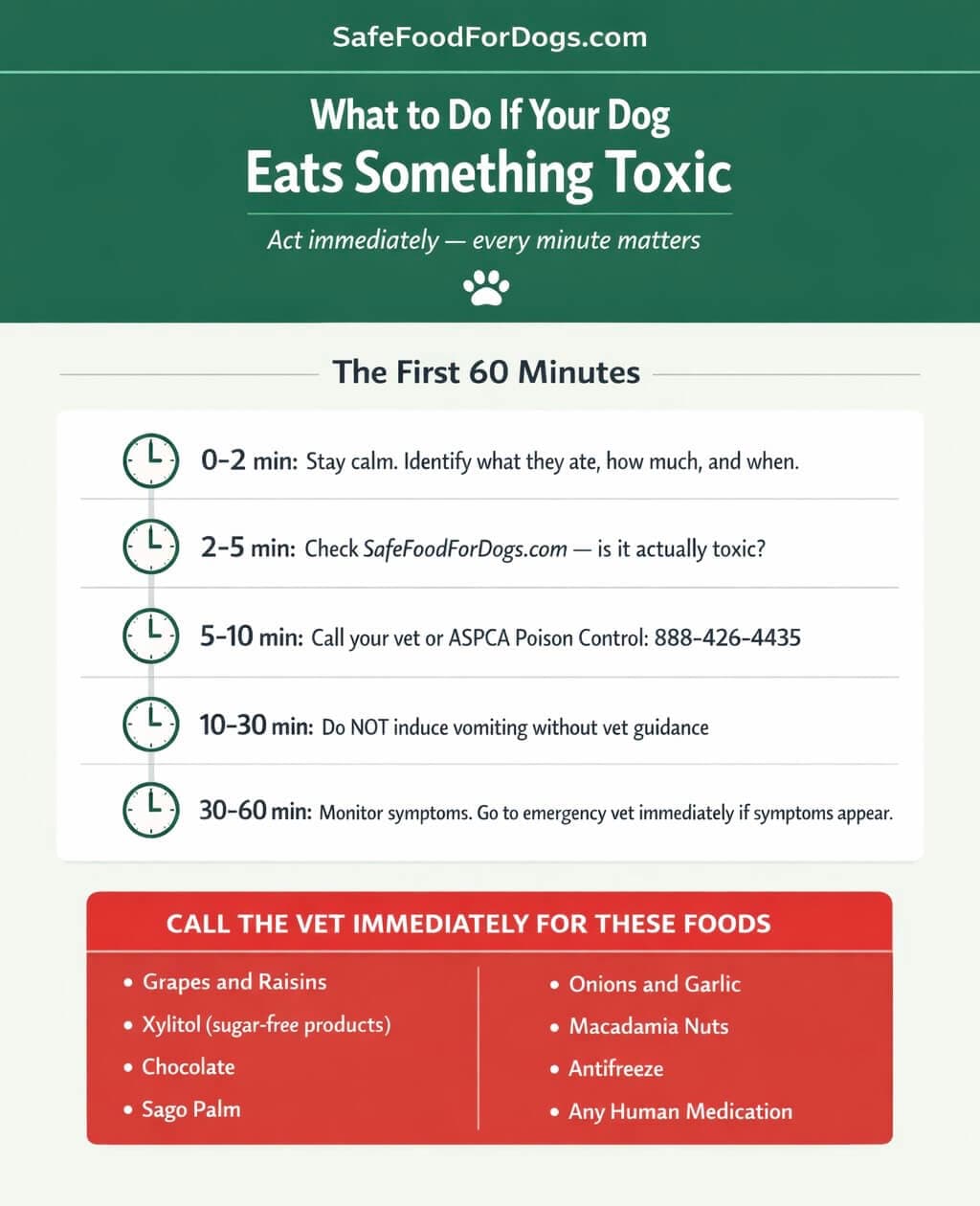
Stay Calm and Act Fast
Panicking wastes the most valuable resource you have — time. Take a breath. Most toxic ingestions are treatable when caught early. Your job right now is to gather information and contact the right people as quickly as possible.
Consider this scenario: Sarah's Labrador Max got into her purse and ate an entire pack of sugar-free gum containing xylitol. She panicked, wasted 20 minutes searching online for home remedies, and by the time she called the vet the xylitol had already begun causing a dangerous drop in blood sugar. Early intervention could have prevented the severity of what followed.
Do not be Sarah. Read this guide now. Act immediately.
Step 1 — Identify What They Ate
Try to determine exactly what your dog consumed:
- What was the food or substance?
- How much did they eat — a bite, a handful, an entire portion?
- How long ago did they eat it — minutes, an hour, several hours?
- What does your dog weigh?
This information is critical. A 40kg Labrador eating one grape faces a different risk level than a 3kg Chihuahua eating the same. The amount and timing change what treatment is possible.
If you are not sure what they ate check the area — look for packaging, wrappers, or remnants. Take a photo of whatever they ate if possible. Check your bin, countertops, and anywhere your dog has been in the last hour.
Real scenario: A Golden Retriever got into the kitchen bin and ate what appeared to be leftover food. The owner assumed it was safe until they noticed the remnants of a sugar-free dessert containing xylitol. Always check packaging even when you think you know what they ate.
Step 2 — Check If It's Actually Toxic
Not everything dogs eat is dangerous. Many panics turn out to be false alarms.
Use SafeFoodForDogs to instantly check whether the food is safe, caution, or toxic. Search the food your dog ate and get immediate guidance.
Foods that require emergency vet care regardless of amount:
- Grapes and raisins — acute kidney failure
- Xylitol — found in sugar-free products, causes liver failure
- Chocolate — especially dark or baking chocolate
- Onions and garlic — destroy red blood cells
- Macadamia nuts — neurological symptoms within 12 hours
- Sago palm (found in many gardens and homes) — liver failure, even one seed can be fatal
- Antifreeze — sweet taste attracts dogs, fatal within 24-72 hours
- Any human medication
If your dog ate any of these — skip the rest of this article and call your vet immediately.
Step 3 — Call for Help
Do not wait for symptoms to appear. By the time symptoms show the toxin has already been absorbed. Early intervention is always better.
Contact one of these immediately:
- Your regular vet — call their emergency line first
- Emergency veterinary clinic — find your nearest 24-hour emergency vet now
- ASPCA Animal Poison Control: 888-426-4435 (24/7)
- Pet Poison Helpline: 855-764-7661 (24/7)
What to Tell the Vet
When you call be ready to provide this information clearly and calmly:
- Your dog's weight, breed, and age
- Exactly what they ate — the brand name if possible
- The estimated amount consumed
- The exact time of ingestion or your best estimate
- Any symptoms already showing
- Any pre-existing health conditions your dog has
- Any medications your dog is currently taking
The more specific you can be the faster the vet can determine the right course of action. Having the packaging in hand when you call makes a significant difference.
Step 4 — Do NOT Do These Things
Do not induce vomiting without vet guidance. Some toxins cause more damage coming back up. Caustic substances like batteries, bleach, or cleaning products cause chemical burns on the way down and again on the way up. Always ask a vet before inducing vomiting.
Do not give milk. The old advice that milk neutralizes poison is a myth. It does not work and can cause digestive upset on top of the existing problem.
Do not wait and see. Symptoms for some toxins — especially grapes, xylitol, and antifreeze — appear hours or days after ingestion. By the time your dog shows symptoms serious organ damage may have already occurred.
Do not search the internet for treatment protocols. Call a professional. Every situation is different and internet advice is not a substitute for veterinary guidance.
Do not give food or water unless specifically instructed by a vet. Some treatments require an empty stomach.
Step 5 — Monitor and Document
If a vet advises you to monitor at home rather than come in immediately watch for these symptoms:
- Vomiting or diarrhea
- Excessive drooling
- Lethargy or weakness
- Loss of coordination or stumbling
- Pale or yellow gums
- Muscle tremors — often appear before seizures
- Seizures
- Difficulty breathing
- Excessive thirst or urination
- Loss of appetite
- Swollen abdomen
Write down the time any symptoms appear and how severe they are. Take a short video on your phone if symptoms are occurring — vets find this extremely helpful for assessment.
If any of these symptoms appear go to an emergency vet immediately regardless of what you were previously advised.
Step 6 — At the Vet
Bring everything you can:
- The packaging or a photo of what they ate
- Your notes on timing and symptoms
- Any vomit if the dog has already been sick — unpleasant but diagnostically useful
- A list of any medications your dog takes
- Your dog's vaccination records if you have them handy
Your vet may induce vomiting, administer activated charcoal to prevent further absorption, start IV fluids to support kidneys, or monitor organ function with blood tests depending on what was consumed and when.
What Does Emergency Vet Treatment Cost?
This is a question many dog owners have but feel uncomfortable asking. Emergency vet treatment for poisoning typically costs:
- Initial consultation and assessment: $100-300
- Induced vomiting: $200-500
- Activated charcoal treatment: $100-300
- IV fluids overnight: $500-1,500
- Blood work and monitoring: $200-600
- Hospitalization per day: $500-2,000
A serious poisoning case can cost $1,500-5,000 or more depending on the toxin and how quickly treatment began. This is one of the strongest arguments for pet insurance — an unexpected poisoning event is one of the most common and costly pet emergencies.
How to Prevent Toxic Ingestion — Dog Proofing Your Home
The best emergency response is the one you never need. Here is how to reduce the risk:
Kitchen:
- Keep all food in sealed containers or high cupboards
- Never leave food unattended on counters — dogs can reach further than you think
- Secure bin lids — a curious dog can open many standard bins
- Keep sugar-free products in locked cupboards — xylitol is in hundreds of products
- Check all peanut butter labels — many brands now contain xylitol
Living areas:
- Keep handbags and backpacks off the floor — gum, medication, and xylitol products live in bags
- Store all medications in locked medicine cabinets
- Keep houseplants out of reach — many common houseplants are toxic
- Secure electrical cables — chewing can cause chemical burns
Garden:
- Know what plants are in your garden — azalea, rhododendron, sago palm, and yew are all deadly
- Store antifreeze, pesticides, and fertilizers in locked sheds
- Check mulch type — cocoa mulch smells attractive to dogs and contains theobromine
- Be aware of mushrooms growing naturally — many wild varieties are fatal
Guests and holidays:
- Brief guests about not feeding your dog — well-meaning visitors cause many poisoning incidents
- Keep holiday foods secure — Christmas pudding, mince pies, and chocolate are all toxic
- Be extra vigilant at parties when food is accessible and supervision is reduced
The Most Dangerous Foods to Know
- Grapes and raisins — acute kidney failure, can be fatal
- Xylitol — found in sugar-free products, causes liver failure within hours
- Chocolate — theobromine toxicity, severity depends on type and amount
- Onions and garlic — destroy red blood cells, effects accumulate over time
- Macadamia nuts — neurological symptoms within 12 hours
- Antifreeze — sweet taste attracts dogs, fatal kidney failure within 24-72 hours
- Sago palm — liver failure, even one seed can be fatal
Be Prepared Before It Happens
- Save your vet emergency number in your phone now
- Save the nearest 24-hour emergency vet in your phone now
- Save ASPCA Poison Control 888-426-4435 in your phone now
- Bookmark SafeFoodForDogs for instant food safety lookups
- Know your dog's weight — vets will ask
- Consider pet insurance before an emergency happens — not after
Quick Reference — Emergency Contacts
| Contact | Number | Hours |
|---|---|---|
| ASPCA Animal Poison Control | 888-426-4435 | 24/7 |
| Pet Poison Helpline | 855-764-7661 | 24/7 |
| Your vet | Save this now | Check hours |
| Emergency vet | Find nearest now | 24/7 |
Frequently Asked Questions
How long does it take for a dog to show signs of poisoning? It depends on the toxin. Xylitol causes symptoms within 30-60 minutes. Grapes and antifreeze may take 24-72 hours before serious symptoms appear. Never wait for symptoms — contact a vet immediately.
Should I make my dog vomit if they eat something toxic? Never induce vomiting without vet guidance. Some toxins cause more damage coming back up. Always call a vet or poison control first.
What is the ASPCA poison control number for dogs? The ASPCA Animal Poison Control Center number is 888-426-4435. It is available 24 hours a day 7 days a week. A consultation fee may apply.
How much chocolate is toxic to dogs? It depends on the type of chocolate and your dog's weight. Dark chocolate and baking chocolate are most dangerous. Even small amounts can be toxic for small dogs. Use our chocolate guide to assess the risk.
What should I do if my dog eats grapes? Call your vet immediately. Do not wait for symptoms. Grapes cause kidney failure and there is no safe amount. Time is critical.
Can dogs recover from poisoning? Yes — many dogs make a full recovery when treated quickly. The sooner you contact a vet the better the outcome. Early intervention is the most important factor.
Learn about dog poisoning treatment and what to expect at the emergency vet.
How much does emergency vet treatment for poisoning cost? Emergency poisoning treatment typically costs between $500 and $5,000 depending on the toxin and severity. IV fluids, hospitalization, and specialist care add up quickly. Pet insurance can significantly reduce this financial burden.
Unexpected emergency vet bills can be financially devastating. Learn about the best pet insurance options for dogs to protect yourself before an emergency happens.
How do I dog proof my home against toxic foods? Store all food in sealed containers or high cupboards, secure your bin, keep handbags off the floor, lock away medications, and know which plants in your garden are toxic. Prevention is always better than treatment.
Always consult a licensed veterinarian for advice specific to your dog. This guide is for educational purposes only.