If your dog ate something toxic, contact your veterinarian or an animal poison-control service promptly. Our toxicity calculator is temporarily unavailable — see our emergency advisory for who to contact.
Toxicity Emergency AdvisoryYou rush your dog to the emergency vet after they ate something toxic. What happens next?
Understanding what vets actually do to treat dog poisoning helps you make informed decisions, set realistic expectations, and be financially prepared. This guide walks through the real treatment protocols for the most common dog poisonings.
See our complete toxic foods list to understand which foods caused the poisoning.
If your dog just ate something toxic right now — contact your veterinarian or an animal poison-control service promptly, see our Toxicity Emergency Advisory, and follow our Emergency Guide for the steps to take in the next 60 minutes.
What Happens When You Arrive at the Emergency Vet
Triage: You will be assessed immediately. If your dog is having seizures, cannot breathe, or has collapsed they go straight to treatment. Otherwise you complete intake paperwork while your dog is assessed.
History taking: The vet will ask you exactly what was consumed, how much, and when. Bring the packaging if you have it. This information directly determines treatment protocol.
Physical examination: The vet checks vital signs, gum color, neurological status, and signs of toxicity. Gum color is one of the fastest indicators of cardiovascular and oxygen status.
Stabilization: If your dog is in distress — seizuring, in shock, having difficulty breathing — stabilization comes before diagnostics.
Diagnostics: Bloodwork, urinalysis, and sometimes imaging to assess organ function and confirm the extent of toxicity.
Decontamination - Removing the Poison
The first treatment goal is preventing more toxin from being absorbed. There are two main methods:
Induced Vomiting
Vomiting is induced when:
- The dog ate something toxic within the last 1-2 hours
- The toxin is not a corrosive substance
- The dog is conscious and not showing neurological symptoms
How it is done: Vets use apomorphine - an injectable drug that reliably induces vomiting within minutes. This is more reliable and safer than hydrogen peroxide used at home.
When it is NOT done:
- More than 2 hours after ingestion — most toxins have already been absorbed
- After corrosive ingestion like bleach or drain cleaner — causes additional burns on the way up
- If the dog is already having seizures or is unconscious
- For petroleum products or sharp objects
Cost: $50-$150 for induced vomiting
Activated Charcoal
Activated charcoal is given after vomiting or when vomiting is not appropriate. It works by binding to toxins in the GI tract and preventing absorption.
How it is given: Orally as a black liquid or paste through a syringe or stomach tube. Dogs rarely cooperate willingly — it often requires sedation or tube administration.
Effective for: Chocolate, many medications, rat poison, certain plant toxins
Not effective for: Xylitol, alcohol, iron, acids and alkalis
Multiple doses: Some toxins require repeated activated charcoal doses over 12-24 hours as the toxin continues cycling through the GI tract.
Cost: $75-$200 for activated charcoal treatment
Supportive Care - Treating the Symptoms
Once decontamination is complete the focus shifts to supporting the organs while the toxin is processed and eliminated.
IV Fluids
IV fluids are the backbone of poison treatment. They:
- Support kidney function and promote toxin excretion through urine
- Maintain blood pressure and cardiovascular function
- Correct dehydration from vomiting and diarrhea
- Dilute the concentration of toxin in the bloodstream
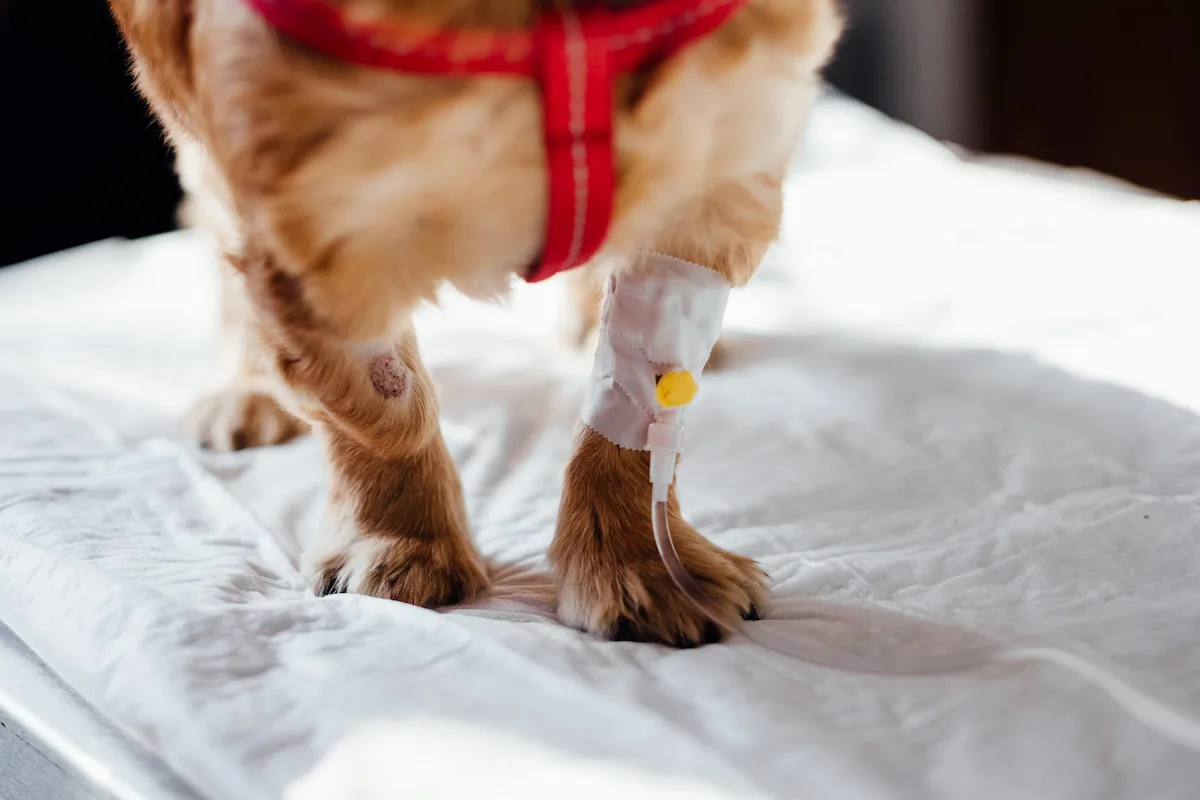
Almost every poisoning case involves IV fluids. A catheter is placed in a vein — usually the front leg — and fluids run continuously.
Cost: $150-$400 for IV catheter placement and initial fluids. $200-$600 per 24 hours of ongoing IV fluid therapy.
Hospitalization and Monitoring
Monitoring is critical because symptoms evolve over time. Heart rate, blood pressure, neurological status, and organ function are checked regularly.
What is monitored:
- ECG for cardiac arrhythmias from chocolate, cardiac glycoside plants
- Blood pressure
- Blood glucose — critical for xylitol toxicity
- Kidney and liver values through repeated bloodwork
- Neurological status
Duration: From a few hours for mild cases to several days for severe organ involvement.
Cost: $500-$1,500 per overnight stay including monitoring and basic care.
Specific Treatment Protocols
Chocolate Poisoning Treatment
Goal: Remove as much chocolate as possible and manage theobromine toxicity symptoms.
Treatment steps:
- Induce vomiting if within 1-2 hours
- Activated charcoal to bind remaining theobromine
- IV fluids to support excretion
- ECG monitoring for cardiac arrhythmias
- Medications to control tremors if needed
- Sedation in severe cases
Duration: 6-24 hours depending on severity
Recovery: Most dogs recover fully with treatment. Large amounts of dark chocolate in small dogs have higher mortality risk.
Typical cost: $500-$2,500
See our chocolate toxicity guide for more detail, and contact your veterinarian or an animal poison-control service promptly if your dog ate chocolate.
Grape and Raisin Poisoning Treatment
Goal: Aggressive decontamination followed by kidney protection — the kidneys are the target organ.
Treatment steps:
- Immediate vomiting induction if within 1-2 hours
- Activated charcoal
- Aggressive IV fluid diuresis — high volume fluids specifically to flush the kidneys
- Repeated kidney function bloodwork every 24-48 hours
- Monitoring urine output — reduced output is a danger sign
- Dialysis in severe cases of kidney failure
Duration: Minimum 48-72 hours of hospitalization recommended even without symptoms — kidney damage develops silently.
The challenge: There is no antidote. Treatment is entirely supportive. Some dogs develop fatal kidney failure despite aggressive treatment.
Typical cost: $1,500-$5,000
Xylitol Poisoning Treatment
Goal: Correct hypoglycemia immediately and prevent liver failure — two separate emergencies.
Treatment for hypoglycemia:
- IV dextrose (sugar) given immediately to raise blood glucose
- Continuous blood glucose monitoring every 1-2 hours
- IV dextrose adjusted based on glucose readings
Treatment for liver failure (if it develops):
- Liver protective medications — SAMe, N-acetylcysteine
- Vitamin K if clotting is affected
- Plasma transfusions for severe cases
- Extended hospitalization 48-72 hours minimum
Duration: 24-72 hours minimum depending on liver involvement
Typical cost: $1,500-$6,000
Onion and Garlic Poisoning Treatment
Goal: Support red blood cell production while hemolytic anemia resolves.
Treatment steps:
- Decontamination if recent ingestion
- IV fluids
- Complete blood count monitoring to track red blood cell destruction
- Oxygen therapy if anemia is severe
- Blood transfusion in severe cases
- Rest — exertion worsens oxygen demand during anemia
Duration: 3-5 days in severe cases as anemia typically worsens before improving
Typical cost: $800-$3,500
Rat Poison Treatment
Treatment depends entirely on the type of rat poison.
Anticoagulant rodenticides (most common):
- Vitamin K1 given orally for 3-4 weeks — this is the specific antidote
- Repeat bloodwork to confirm clotting has normalized
- Blood transfusion if significant bleeding has occurred
- Important: Treatment must continue for weeks after apparent recovery
Vitamin D rodenticides:
- IV fluids to protect kidneys
- Medications to lower calcium levels
- Weeks of monitoring
- No specific antidote
Bromethalin (neurotoxin):
- Activated charcoal
- Seizure management
- Supportive care
- No antidote
Duration: Anticoagulant treatment continues for weeks after the vet visit
Typical cost: $500-$3,000 for initial treatment plus ongoing monitoring costs
Antidotes - When They Exist
Most dog poisons do not have a specific antidote. Treatment is supportive. The few exceptions include:
| Poison | Antidote |
|---|---|
| Anticoagulant rat poison | Vitamin K1 |
| Opioid medications | Naloxone |
| Benzodiazepine overdose | Flumazenil |
| Organophosphate insecticides | Atropine |
| Iron toxicity | Deferoxamine |
| Heavy metals | Chelation therapy |
For most poisonings — chocolate, grapes, xylitol, onions, most plants — there is no antidote. This is why prevention and rapid decontamination are so critical.
What You Can Do Before Reaching the Vet
Do:
- Call ASPCA Poison Control at 888-426-4435 or your vet immediately
- Note the time of ingestion, what was eaten, and approximate amount
- Bring the packaging to the vet
- Keep your dog calm and warm
- See our Toxicity Emergency Advisory for who to contact
Do NOT:
- Induce vomiting without vet guidance — dangerous for some toxins
- Give milk, bread, or other home remedies — these do not help and may worsen treatment
- Wait to see if symptoms develop — many serious poisonings cause no early symptoms
- Give any medications without vet guidance
Financial Preparation
The cost of treating dog poisoning ranges from a few hundred dollars for mild cases to several thousand dollars for severe cases requiring extended hospitalization.
Typical treatment cost ranges:
| Poisoning Type | Typical Cost |
|---|---|
| Mild chocolate | $300-$800 |
| Severe chocolate | $1,000-$2,500 |
| Grapes or raisins | $1,500-$5,000 |
| Xylitol | $1,500-$6,000 |
| Rat poison | $500-$3,000 |
| Antifreeze | $2,000-$8,000 |
Pet insurance covers poisoning treatment from day one. See our best pet insurance guide and emergency vet cost guide to understand your options.
Frequently Asked Questions
How long does dog poisoning treatment take? From a few hours for mild cases requiring only decontamination to several days for severe cases with organ involvement. Grape and xylitol poisoning typically require 48-72 hours minimum. Anticoagulant rat poison treatment continues for weeks.
Will my dog fully recover from poisoning? It depends entirely on the toxin, the amount consumed, your dog's size, and how quickly treatment began. Many dogs make full recoveries with prompt treatment. Some toxins — particularly grapes at high doses and certain plants — can cause irreversible organ damage even with treatment.
Can I treat dog poisoning at home? No. Even cases that seem mild require professional assessment. Many serious poisonings have no visible early symptoms. Activated charcoal, IV fluids, and monitoring require veterinary equipment and training.
How do I prevent poisoning from happening again? Use our complete database of safe and unsafe foods to know what is dangerous. Store all medications, cleaning products, and toxic foods completely out of reach. Learn to recognize the symptoms of dog poisoning so you can act fast if it happens again.
This guide is for educational purposes only and does not constitute veterinary advice. Always contact a licensed veterinarian immediately if you believe your dog has been poisoned.
Last updated: April 2026
Photo by freestocks on Unsplash